
Why do small nonprofits stay small.A conversation about Attraction, Addition, and Trust.
Issue 2 — June 2026
There are times when you think you know someone, and then a single conversation shows you something you missed.
I’ve known Selvon for years. We’ve sat together on nonprofit boards here in the DMV. I was familiar with his reputation and results.
But I never really knew his whole story.
Selvon left Trinidad and Tobago at seventeen. He landed in the US with eight hundred dollars in his pocket.
He and his two brothers squeezed into a studio on Benning Road, D.C. No furniture. They used discarded mattresses to sleep.
One summer, he went to the bank to pay rent. The receipt came back: negative thirty-five dollars.
When the rent ran out, he slept in odd places: staircases, campus, and friends' couches. He pulled his suitcase through the halls at night. Showers happened in the gym before class.
He reached out to his career advisor at the University of the District of Columbia (UDC), tears in his eyes. She called a company about an interview. One mentor even loaned him money for rent, then took him in as a roommate.
He got the job.
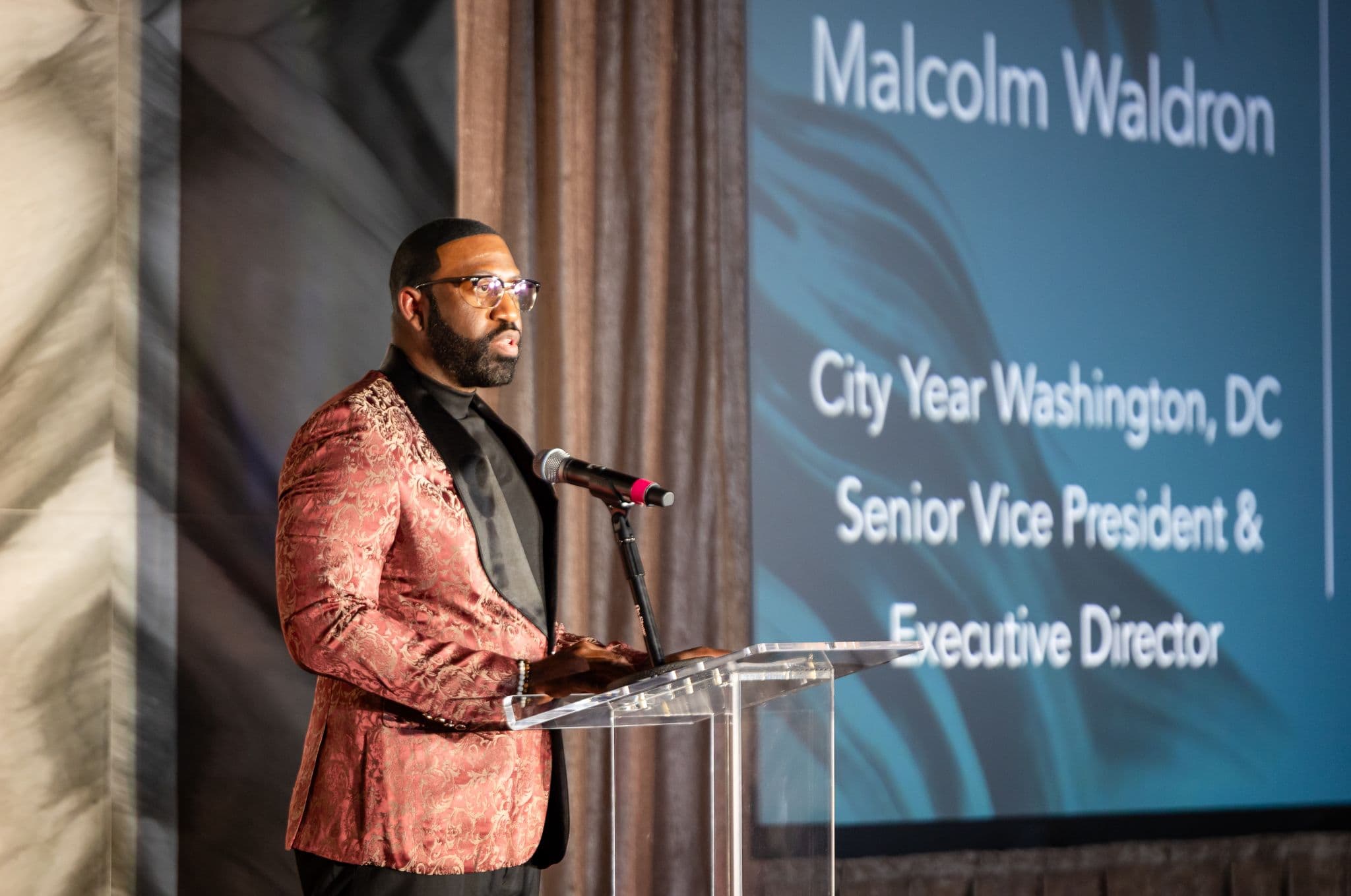
Now, he’s SVP and Executive Director at City Year DC. He teaches nonprofit leadership at the University of Maryland. He’s built boards, grown programs, and raised millions.
But that’s not the part I want to share with you.
What stays with me is his view on why small nonprofits stay small.
— The framework that follows
Selvon’s Framework
He calls it three things. Attraction, Addition, and Trust.
01 / Attraction
Proximity and visibility.
Who knows your organization exists? Who invites you into rooms where real opportunity lives? Most small nonprofits never escape the networks they started with. Not because the work isn’t good, but because the networks were small to begin with, and networks compound. You build your board from the people you know. Those people typically come from the world you came from. That world shapes what you can raise, and from whom.
02 / Addition
What changes the equation.
A stronger board member. A better data system. An earned revenue stream. A strategic partnership that opens a door your existing contacts couldn’t reach. Growth rarely arrives all at once. It accumulates. Selvon completed training with Leadership Greater Washington early in his career, specifically to be in circles he didn’t already have access to. One training program introduced him to someone from Salesforce. That relationship eventually led to a million-dollar grant. One addition. Years in the making.
03 / Trust
The multiplier.
Funders trust organizations that appear stable, prepared, and connected. That trust often decides who gets introduced, who gets the call, and who gets recommended before a formal application is ever submitted. It’s rarely stated out loud. But it shapes everything.
The barriers are not distributed evenly.
Leaders from the communities they serve find each layer harder to access — not because their mission isn’t valuable, but because pathways to visibility and credibility are not distributed evenly. The data keeps showing this discrepancy.
According to Candid, there are 1,935,344 nonprofits in the United States. Of those, more than 1.3 million are 501(c)(3)s. Sixty percent of these organizations are small, with annual revenue of $50,000 or less.
What the data shows
The pipeline is narrower than the mission. By a wide margin.
5%
of nonprofit leaders in the United States are Black.
Source — Leading With Intent
5.3%
of fundraisers in the United States are Black.
Source — Zippia
78%
of nonprofit boards are identified as white.
Source — Leading With Intent
That is not a small thing.
Selvon doesn’t sugarcoat these numbers. They’re what happens when networks keep recruiting from the same circles, year after year. “It takes time,” he said. “And depending on where you started, the barriers could be high.”
What stays with me from our conversation.
It’s not just about who’s in the room. It’s about whether you’re building the foundation before you need it.
Government grants and contracts account for roughly 32% of total nonprofit revenue, but that funding is heavily concentrated in larger organizations. Those grants make up just eleven percent of all nonprofit revenue, and they’re under pressure. Earned revenue accounts for almost 71% of the sector. But Selvon says 90% of nonprofits with annual revenue under $1 million have no real earned revenue model.
32%
of nonprofit revenue comes from Government Grants & Contracts.
Source: Urban Institute
11%
of total sector revenue actually comes from those grants.
Source: Candid
71%
of sector revenue is earned — the largest category by far.
Source: Candid
90%
of nonprofits under $1M have no real earned revenue model according to Selvon’s estimation.
That’s the largest funding category. Most of it is untouched. Earned revenue can come from training workshops, consulting, or the sale of products aligned with your mission. Even small steps — hosting paid community events, offering fee-for-service programs — can help. Every bit adds up and makes your funding more resilient.
The organizations that will expand during this period are already building.
They’re building the right board relationships. The right data systems. They’re practicing their case for investment until it feels natural in any room, at any moment.
That’s not just inspiration. That’s building real infrastructure.
Selvon built all of that the hard way. He started early, before the pressure made it obvious. That was no accident.
The question worth sitting with
Are you building that foundation on purpose, or waiting until you have no choice?
Maybe start with an honest conversation at your next board meeting. Pick one area — board composition, fundraising, or data systems — and talk about how you could make it stronger.
That first step matters. The heart of our conversation is this: sustainable growth in small nonprofits depends on building strong foundations and meaningful relationships before you urgently need them. Preparing early gives your organization the best chance to thrive when opportunities arise.
Thank you to Selvon for the conversation, and for trusting me with the parts of his story I had never heard. I hope you’ll carry one piece of it with you into your next board meeting.
— Kirt
Sources and References
- 01Candid. U.S. Social Sector Dashboard, 2023 IRS Business Master File.candid.org/impact-insights/us-social-sector/organizations/
- 02Candid. “The Invisible Majority: Data Insights on Very Small Nonprofits,” 2025.candid.org/blogs/data-insights-very-small-nonprofits-make-up-majority-us-nonprofits/
- 03BoardSource. Leading with Intent: BoardSource Index of Nonprofit Board Practices, 2021.leadingwithintent.org/previous-reports/
- 04Zippia. Professional Fundraiser Demographics and Statistics, 2025.zippia.com/professional-fundraiser-jobs/demographics/
- 05Urban Institute. Nonprofit Trends and Impacts 2021 to 2023: National Findings on Government Grants and Contracts, October 2024.urban.org/research/publication/nonprofit-trends-and-impacts-2021-2023
- 06Candid. “Diversifying Revenue Sources: Where Do Nonprofits Find Funding?,” 2024.candid.org/blogs/diversifying-revenue-sources-where-nonprofits-find-funding/
The Canopy
The Canopy is a quarterly newsletter for nonprofit leaders in the DMV — one clear issue per quarter, no noise.
Subscribe